


Wisdom Tooth Infection – Symptoms, Causes and Treatment

What is a Wisdom Tooth Infection?

A wisdom tooth infection happens when bacteria build up around a wisdom tooth, leading to swelling because the surrounding tissue becomes infected. Wisdom teeth normally appear between the age of 17 and 25 years old, although there might not be enough space available in our mouths to accommodate 32 teeth, causing them to erupt either incompletely or fail to do so entirely. This may cause bacteria and food particles to accumulate in the region of the affected wisdom tooth, resulting in a condition known as pericoronitis.
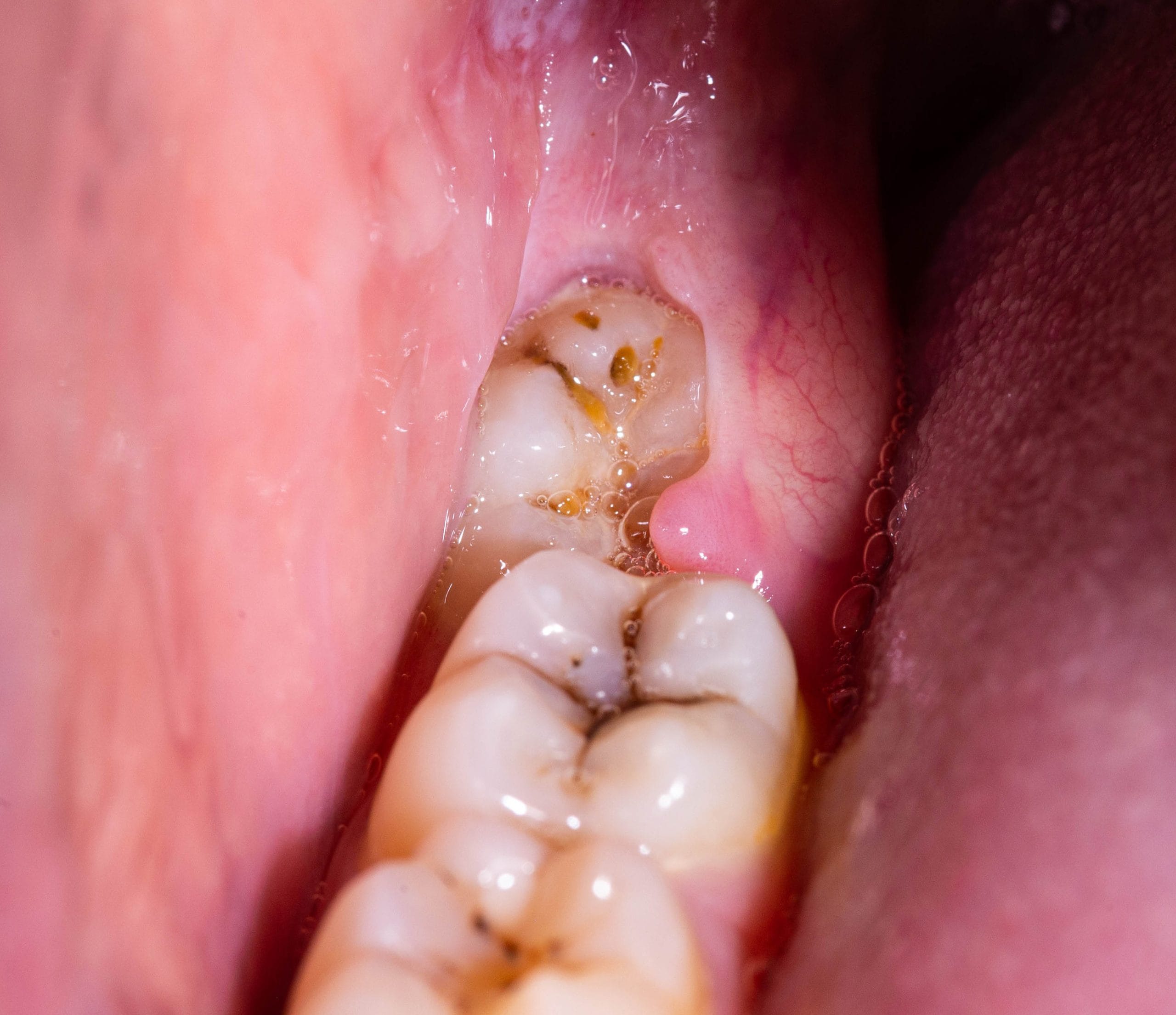

wisdom tooth operculum

Causes of Wisdom Tooth Infections

Factors contributing to infections occurring at wisdom teeth include:

Partially Erupted Wisdom Teeth

If the tooth has partially emerged from the gums but hasn’t completely erupted through the gums, there would always be a flap of gum tissue that will cover the top of the tooth, creating an optimal place for the accumulation of bacteria.

Impacted Wisdom Teeth

Impacted wisdom teeth are teeth that reside under the gum line and/or were not entirely erupted. They may also be pushing against adjacent teeth, thereby making it difficult to clean the tooth properly and putting the tooth at higher risk of developing an infection.

Poor Access for Cleaning

The area of the mouth in which the wisdom teeth are located is harder to brush because it is situated further back compared to other teeth in the mouth.

Tooth Decay

Compared to other teeth in the mouth, wisdom teeth are more prone to tooth decay due to their location. If not treated, decay is a possible cause of infection in these teeth.

wisdom tooth pain

Common Symptoms

The symptoms can range anywhere from slight discomfort to intense pain. Some of the symptoms that one experiences include:

  • Persistent toothache
  • Inflamed, red or bleeding gums
  • Discomfort while chewing food
  • Bad breath (also known as halitosis)
  • Bad taste in the mouth
  • Swelling around the face or jawline
  • Difficulty when opening the mouth
  • Inflamed lymph nodes in the neck region
  • Fever (in more serious cases)

In case you experience any facial swelling or problems with swallowing and breathing, immediate dental treatment is recommended.

Wisdom Tooth Infection – Symptoms, Causes and Treatment

Does a Wisdom Tooth Infection clear up on its own?

Unfortunately, it is unlikely that a wisdom tooth infection will disappear by itself, even if some signs of improvement are observed for some period of time. The problem can recur again, and each following attack may be worse than the previous one. Timely treatment can help to avoid spreading and complications in the future.

Do all Infected Wisdom Teeth need to be removed?

Not always. Sometimes the problem can be effectively treated, as long as the infected wisdom tooth is intact and properly erupted.

If the tooth is impacted or problematic in any other way, it would probably be best to have it extracted. Our highly-skilled dentist will evaluate your unique case.

Wisdom Tooth Infection – Symptoms, Causes and Treatment

What are the treatment options?

There are several ways to treat or manage a wisdom tooth infection, depending on the extent of infection and the location of the tooth.

Professional Cleaning

In case of minor infections, a dentist should clean the affected tooth and gum carefully.

Antibiotics

In case of severe infection or inflammation, antibiotics may be recommended to help to cope with the infection.

Irrigation of the Area

Infected gums can be irrigated to get rid of the harmful bacteria and food remnants.

Wisdom Tooth Extraction

If infections are recurring and caused by the affected wisdom tooth, then tooth removal might be the best option.

Wisdom Tooth Infection – Symptoms, Causes and Treatment

What happens during a Wisdom Tooth Removal?

Most patients feel anxious about having a wisdom tooth removed, but the advanced practices used by our dentists have made these procedures a lot less painful than expected.

An effective numbness of the region will be done using a local anaesthetic that makes the patient comfortable during the whole process. Based on how complex your situation is, wisdom teeth removal can be done in a single visit.

How can I prevent Wisdom Tooth Infections?

Although not all wisdom tooth infections can be prevented, you can take the following steps to decrease the chances:

  • Brushing thoroughly twice daily
  • Cleaning around wisdom teeth carefully
  • Regular dental visits
  • Getting treated as soon as symptoms appear

Early detection usually means easier treatment options.

Wisdom Tooth Infection – Symptoms, Causes and Treatment

Why choose us?

At Pearl Dental Clinic, we frequently treat wisdom tooth infections and other dental emergencies.

Patients choose us for:

  • Same-day emergency appointments where available
  • Experienced dentists and oral surgery providers
  • Comprehensive digital diagnostics
  • Open 7 days a week
  • Late appointments available until 10:00PM
  • Clear treatment plans with transparent advice

We will aim to relieve any discomfort you might feel and provide the most effective long-term solution for your oral health.

book an appointment

Book an appointment today

Have you been experiencing symptoms of an infected wisdom tooth? Don’t worry, we are here to help.

We will be able to evaluate your condition, determine the reason for your dental problem, and help you find the best way to address your concerns.

Call us today on 020 8547 9997

Alternatively, book your appointment online or message us on WhatsApp and let our team help you restore your comfort, health and peace of mind.

Call us today on 020 8547 9997

Whatever you need, our friendly team is looking forward to hearing from you.

Simply get in touch and we’ll be happy to help.


Find us on Google maps

Get directions

Send our team an email

On submitting the form you consent to Pearl Dental Clinic collecting your personal data. For more information please read our privacy policy.