Dental Implant

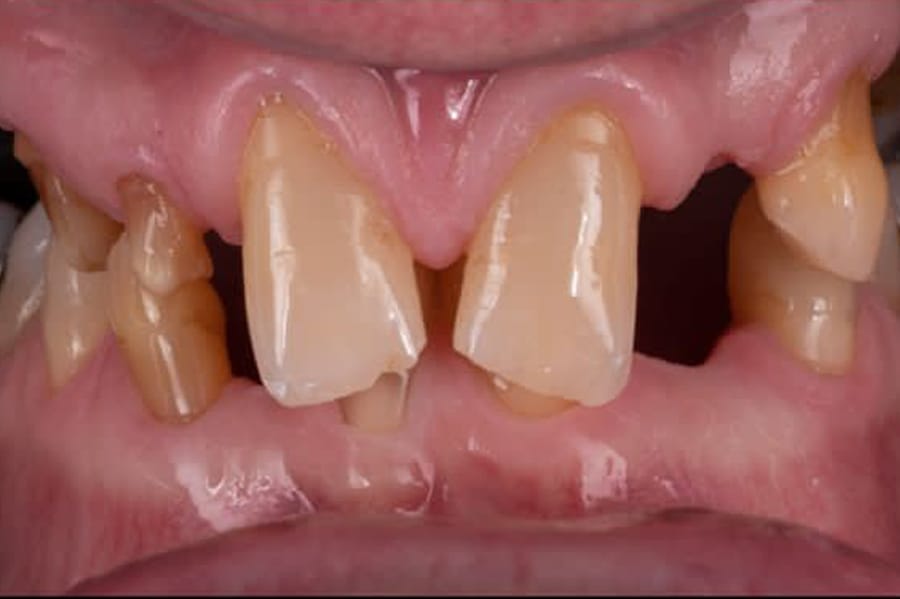
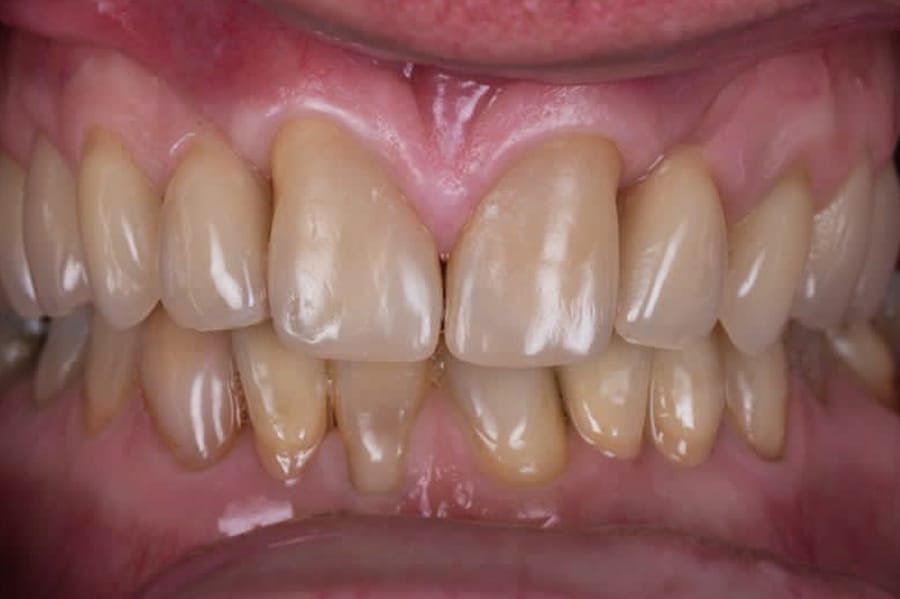
Dental Implants provide a long lasting and aesthetic solution for the problem of missing or broken down teeth.
There are well over 100 different implant systems currently in use around the world. Only a handful of these implant systems have any substantial evidence in the dental research literature to back their use, and even fewer implant systems have any substantial long-term follow up evidence to support their use on patients.
Missing tooth options
When a tooth is missing there are usually a number of solutions available.
You could have a false tooth made and fitted to a plate.
Alternatively a Bridge can be fitted to an adjacent tooth.
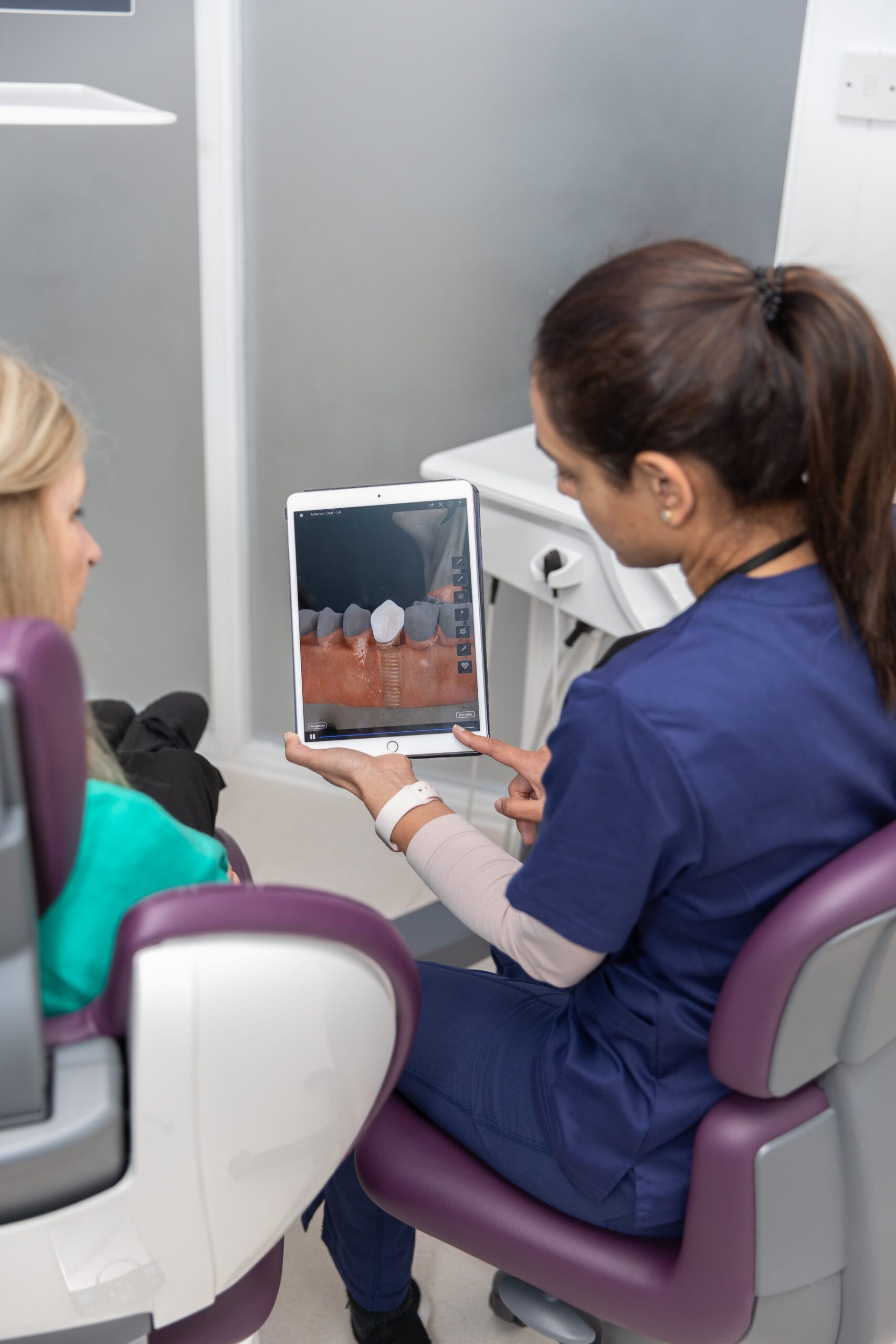
Or you could have a Dental Implant which doesn’t affect the adjacent teeth.
In our practice, we have selected the most modern, top of the range dental Implants from Straumann, Nobel Biocare and Camlog. These implant systems are all world class dental implant companies which have been established for many years.
There are many alternative cheaper type of implants available in the market but as we do not have the much needed scientific and clinical support to back their performance, at Pearl Dental Clinic we do not think is justifiable to provide them to our patients no matter what the financial benefits can be to both to the patients and the dentists.
Also by using dental implants from one of the major implant companies, we ensure that in years to come if the patient’s implant needs a new screw or an abutment, the company is likely to be still in business to supply the parts needed for maintenance.
Straumann, Nobel Biocare and Camlog implant companies have decades of clinical research behind their implant systems, which has resulted in numerous independent scientific studies being published on them. With such extensive research, we believe that these implant systems, are the most thoroughly documented, clinically validated, peer reviewed and research proven implant systems on the market today.
Camlog Implant System
The Camlog implant system is a reliable prosthesis oriented implant system and similar to the other types, is continually updated to the latest technological standards. This has ensured the development of an implant system with optimal implant surface, primary stability and numerous convincing long term studies.
Camlog has been established in Germany for many years and is a very well respected and reliable dental implant system.
Nobel Biocare
Nobel Biocare implants offer the solutions for all indications, from a single-tooth to fully edentulous restorations (Same day Teeth), offering one of the best quality and aesthetic results. Nobel Biocare implants have probably the widest range of suprastructures available to dentists which makes them the most suitable implant system for replacing multiple missing teeth.
Nobel Biocare is the number one manufacturer of dental implants in the world, making its dental implants the most widely used and tested dental implant system in the world.
Straumann SLActive
Manufactured from pure titanium, Straumann SLActive implants feature optimal surface topography for bone cells to attach themselves, allowing osseointegration to occur in as little time as six weeks. This allows the Straumann SLActive Implant to be loaded with a crown and be placed into occlusion much faster than other Implants that require a healing time of up to six months.
Straumann SLActive implants have been specially developed to optimize implant stability and reduce the risk of failure. The latest research findings substantially support the fact that, with over 90,000 implants used worldwide Straumann SLActive implants deliver an extremely low failure rate of less than 1%.
Straumann Roxolid
Straumann Roxolid dental Implants are the new generation of small width but full length implants which have been designed for situations where there is limited space between teeth or situations where the bone available is thin, requiring a smaller width implant.
Straumann Roxolid™ Implants are made from an alloy of titanium (80%) and zirconium (20%) which means that Roxolid™ has a higher fatigue and tensile strength than pure titanium dental implants of the same width. In addition studies have shown that bone integrates with Roxolid implants better than with pure titanium implants
Mini Implant
We do not use any mini (4 – 5 mm) length Implants as these cheap implants have a much higher failure rate under loading compared to full sized Dental Implants. We only use regular length implants that range between 8 and 14mm in length.
Many dentists use mini implants only as a temporary solution or use them as a temporary measure for orthodontic anchorage. Please follow the link here to see research on why we do not use Mini Implants.
For a better functional and cosmetic dental implant outcome, where needed we always carry out bone grafting. We can use the patient’s own bone, irradiated cadaver bone, synthetic bone or bovine derived bone. If bone grafting is not carried out in cases where it is necessary, it can lead to serious problems for the patient.
Implant Ridge Preservation
Once a tooth is lost, the bone and gum will begin to recede.
If you later decide to have an Implant fitted, it may mean that the Implant would sit too high or the Crown would sit too low for your ‘bite’.
A bone graft material can be inserted into the cavity to encourage bone re-growth.
Over time, this will provide a sufficient amount of bone to support the Implant.
Our German trained Specialist Oral Surgeon Dr. Dejan Dragisic is highly experienced in Implantology having successfully placed well over 2,000 dental Implants. He is on the General Dental Councils list as a specialist in Oral Surgery. Dejan is a perfectionist and has spend almost all of his time over the past 10 years, placing or restoring dental implants. He has an implant success rate of 99.9%.
If you have had an accident or have loss of Jawbone due to lack of most or all of your teeth, our experienced specialist Oral Surgeon can provide expert specialist treatments such as Same day teeth, Bone grafting, Sinus lift, Soft tissue grafting and Full mouth rehabilitation.
We are one of a few practices in the UK to have an in-house Sirona XG plus Digital Panoramic Scanner with Digital Transverse Slice Acquisition (TSA). This state of the art high tech machine allows us to obtain very accurate high definition cross-sectional images of the Implant area. This results in much more accurate treatment planning and very precise Implant placement.

For those patients that suffer from dental anxiety, we offer multiple drug Specialist Anaesthetist Deep Sedation to help patients feel more relaxed during Implant treatment in a safe environment. Also, by using the WAND™ computerized painless injection system we eliminate the dreaded injection pain and make your implant experience a much more pleasant one.
We will always provide you with a full written treatment plan so that you are fully aware of the costs involved. We have published all of our fees on our web site, so that there are no hidden costs.
We provide 0% Finance on all implant treatments allowing you to spread the cost of treatment over a period that suits you.
For your peace of mind, all of our dental implant treatments are covered by our 12 months guarantee. For a small additional fee, you can extend your implant warrantee with a reputable insurance provider. If you follow our implant maintenance advice, your new dental implant should last for many years.
All of our Implant treatments are provided in one London location from start to finish. Our practice is open 7 days a week and we always have an emergency dentist on-call 24 hours of the day, ensuring that we provide you with complete Implant after-care 24 hours of the day.
Just a few points to consider when you are thinking about Implants
| Are you going to provide me with a full written treatment plan and costing’s at my consultation visit without added hidden costs once treatment starts? | ![]() |
| Can I spread my treatment cost over 12 months with Interest Free Finance? | ![]() |
| Will I be informed in writing of the risks of Implant surgery before treatment begins so that I am fully informed of possible risks and complications? | ![]() |
| Is my medical history going to be fully reviewed and implant placement only recommended if I have no absolute medical contra-indications to implant surgery? | ![]() |
| Will I be told if I have gum disease and advised to have my gum disease treated before any implant treatment is started to minimize the risk of implant loss through peri-implantitis in future? | ![]() |
| Will I be informed if I suffer from grinding and clenching and advised to have these habits treated before starting implant treatment to reduce the risk of implant fracture? | ![]() |
| Will I be informed if I suffer from bone loss in the implant site and advised to have bone grafting in order to prevent the cosmetic and functional failure of the implant threads becoming exposed short of long term? | ![]() |
| Will you do bone grafting if needed, to prevent the failure of my implant crown needing poorly matching pink porcelain to cover up missing bone and gum or my implant needing a very long unsightly crown? | ![]() |
| If I need bone grafting, will you discuss the various types of bone grafts available to me and allow me to choose the type of bone graft that I am most comfortable with having in my mouth and not insist that I have one particular type of bone graft material because its the cheapest available? | ![]() |
| If I need bone grafting, am I going to be provided with a resorbable Bio-Gide membrane at no additional cost to increase bone grafting success rate? | ![]() |
| Will my Implant treatment be carried out under full sterile theatre conditions with disposable surgical gowns worn by myself and the surgical staff around me in order to minimize the risk of bone infection? | ![]() |
| If the Implant is going to be placed close to the Maxillary sinus, are you going to do sinus lift or sinus tap procedures where necessary and do everything possible to avoid damaging my sinus lining? | ![]() |
| If the implant is going to be placed close to a nerve supply, are you going take X-rays during the implant placement procedure and do everything possible to avoid damaging that nerve supply? | ![]() |
| Will I only be provided with implants that have been fully tested and have years of research and development behind them rather than implants that are hybrid copies of several different outdated implant systems with no research behind their design? | ![]() |
| After implant surgery, will I be provided with antibiotics, painkillers, antiseptic mouthwash and written post-op instructions at no additional cost? | ![]() |
| Will I be provided with a temporary abutment and temporary crown for implants in the cosmetic zone, in order to achieve the best gum shape around my implant? | ![]() |
| For the front of the mouth, Will I be sent at no additional cost to a cosmetic lab to have the most accurate shade taking for my final implant crown? | ![]() |
| Will you promise not to rush my treatment by loading my implant with a crown too early and allow enough time for adequate implant-bone union to take place before loading in order to achieve the best long term implant success? | ![]() |
| For a genuine Implant guarantee, will I be given the option to insure my dental implant against failure with a reputable implant insurance provider? | ![]() |
| Will I have immediate access to the Pearl dental clinic 24 Hour 365 days a year dental emergency service should I need any emergency treatment? | ![]() |
| Does Pearl dental clinic focus 100% on quality & service and on providing the best cosmetic and long lasting dental implants rather than on case quantity? | ![]() |
Our Practice is open seven days a week from 8am till 11pm. You can call us on 0208 547 9997 or 0208 481 0003 or emailing us for further information or to arrange a consultation.
There are a number of incidents that may occur to result in the loss of a tooth, but each event can be extremely distressing for members of the public. Having a missing pearly white, particularly at the front of the mouth, can make people feel unattractive and therefore shy away from public events.
Among the factors that can contribute to experiencing a missing tooth are dental trauma – which is possibly the most common – as well as severe tooth decay, gum disease or old age. Over the years, many treatments have emerged to provide solutions for those image-conscious individuals who have suffered this often painful and humiliating loss.
Patients who sustain this type of ailment and decide to seek treatment usually have a denture or fixed bridge installed. However, the increasing popularity of dental implants has highlighted this course of action as a valid and long-term option for those hoping to make the most of their smile.
What is a dental implant?
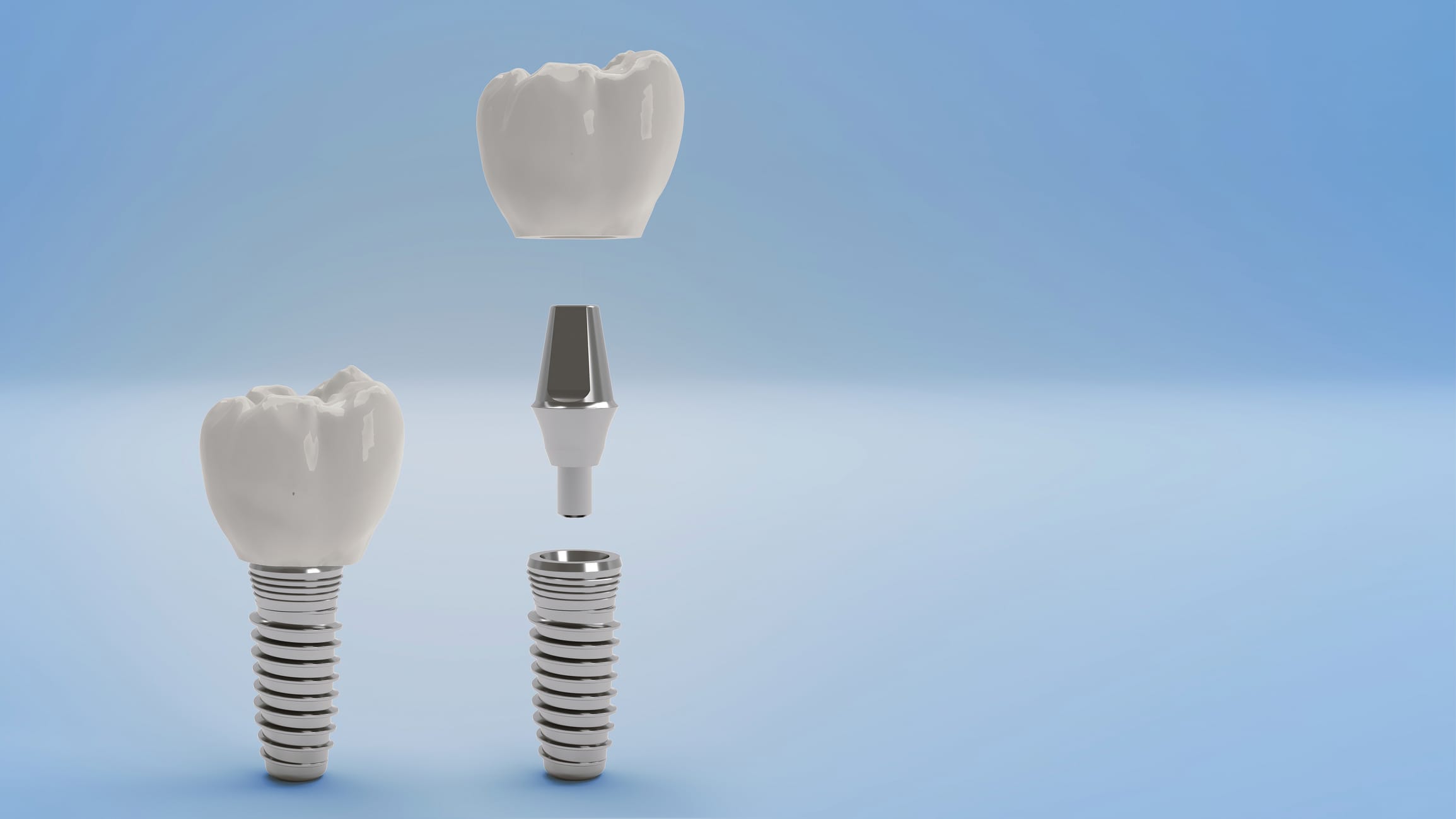
This device is an artificial replacement for the part of the tooth that goes down to the gum tissue and is anchored into a previously drilled socket in the jawbone that will support a crown, bridge or secure denture.
Created from titanium, the implant is able to integrate effectively with the bone and is also well tolerated by the tissue, which supports the goal of creating a close contact between the outer surface and surrounding area to create a stable support for the new teeth.
What are the advantages of dental implants?
Improved functionality – When the installation is fully integrated into the jaw, they function just as well as natural pearly whites. This means individuals who had previously been restricted to a particular diet can eat the foods they enjoy and speak with confidence.
With traditional methods of replacement, certain items can bring on issues and cause the implements to come loose and patients can experience pain in their gums due to the discomfort of hard biting forces.
Reduced bone loss – When teeth are lost, the surrounding bone slowly begins to disappear, which can alter the shape of the jaw and cause it to sag. Patients who select dental implants will find growth is stimulated, which prevents loss of the structure and allows the face to maintain a youthful appearance.
If the mouth is left without a tooth for a long period of time, the loss of bone can be substantial and a bone graft may be needed before installing the dental implant.
This is a common problem among older individuals that wear dentures who are likely to need these implements adjusting to fit the new shape of their jaw as it begins to change, as this loss can make a person look older.
Improved aesthetics – A dental implant can look and feel like a natural tooth, which is possibly its primary benefit. Traditional methods of replacement can be uncomfortable to wear and have unsightly metal clasps to hold them in place.
Healthy teeth are unaffected – When replacing missing pearly whites with bridges, the adjacent teeth need to be prepared and healthy structure is removed to accommodate the installation. If one of the supporting areas is damaged in the future, the entire restoration will also need to be changed.
This problem does not occur with dental implants as they do not require support from the other teeth.
Improved oral health – Previous methods of dental correction need special cleaning methods to remain in top condition, while dental implants allow wearers to brush and floss as they would with their natural teeth.
How is it installed?
Prior to this course of action, a dental professional will assess the health of the patient’s teeth and gums to determine any wider oral health issues. If these are detected, they must be treated before the implant can be fitted.
Therefore, the procedure will be scheduled following a series of X-rays and a CT scan to examine the quality of bone and check for anatomical structures to avoid before drilling takes place.
In most cases, the treatment is carried out under local anaesthetic, but IV sedation is often used if the process is likely to be complex or the patient becomes very anxious.
During the procedure, a small hole is drilled into the jawbone through a small incision in the gum tissue in the precise location of the implant. The titanium structure is then installed into this socket and the gum is stitched back over.
If there is insufficient bone to accommodate the structure, a dental professional may need to carry out a bone graft, or – alternatively – a smaller-sized appliance will be used if suitable.
Following this, the area is then left to heal and integrate with the surrounding area for between six weeks and six months. This time period will allow the bone tissue to anchor itself into the rough surface.
Patients are usually given temporary teeth during the healing process so they can enjoy the appearance of a brand new smile in the meantime. The next step of the dental implant procedure is to lift the gum tissue for a second time and attach a post to it with a temporary crown.
After between four and six weeks, this area is likely to have matured and the final permanent restoration can be fitted to the implant.
How many teeth can be supported?
Although traditional implants were designed for the replacement of a single tooth, individuals with many missing pearly whites can now take advantage of the treatment. The number of installations required depends on the density of the bone tissue available in each area, while smaller-sized materials are used to secure dentures in place.
During full-mouth reconstructions where ten or more teeth need to be supported, a minimum of five implants in each jaw is usually required.
Do I qualify for treatment?
Dental implants can be used to improve the smiles of patients in varying age groups, with the condition that they carry out an effective oral health routine and have enough tissue available. However, there are a number of circumstances that may affect a dental professional’s decision to go ahead with the treatment.
High alcohol intake – this can disrupt the healing process of the gums when the initial incision has been made.
Heavy smoking – similarly, individuals who smoke a high number of cigarettes may find their wounds do not heal as fast as those who do not.
Gum disease – this issue must be treated before any procedure is carried out to ensure its long-term success. Additionally, this problem is a contributing factor for bone loss that could hinder the success of any treatment.
Teeth grinding – individuals who grind their teeth during the night can request a night-time splint that is often able to treat the condition.
How long do dental implants last?
Used for many years to replace missing teeth, these appliances can last a lifetime if they are well looked after. Patients are advised to maintain a good oral health routine for this to prevent dental trauma and gum disease.