Types of bridges available at Pearl Dental Clinic
An adhesive bridge and Maryland dental bridges involve no or very little preparation of the neighbouring tooth, which has made them the most popular bridge design currently available as a front teeth bridge.
Adhesive bridge
Adhesive dental bridges, also known as resin bonded dental bridges, are the modern type of conservative teeth bridge that have nowadays more or less replaced conventional fixed dental bridges for front teeth. Resin bonded bridges do not require any tooth reduction and so do not cause any damage to neighbouring teeth. With adhesive bridges, the false tooth is bonded using a framework wing to the inside wall of one neighbouring tooth. They are also often cheaper than conventional bridges.
Maryland bridges
Maryland dental bridges are made from a specially formulated, highly durable porcelain, and held in place with metal wings that are fixed to the neighbouring tooth. Maryland tooth bridges are a type of no-drilling bonded dental bridge which are very popular as they do not need the neighbouring teeth to be shaved down. These bridges are generally more suitable for patients who need a front teeth bridge.
Learn more about Maryland bridgesConventional bridges
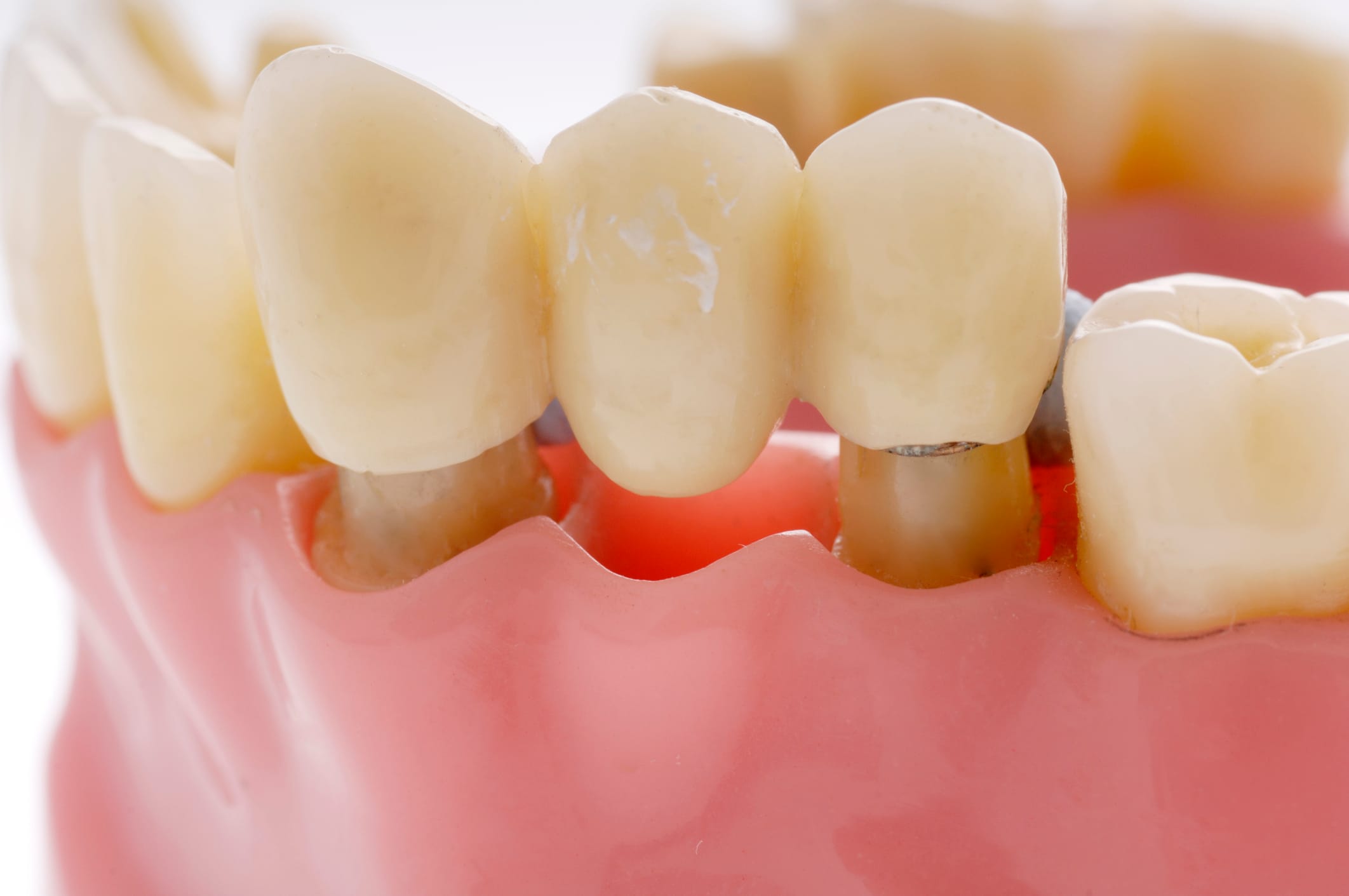
Conventional bridges involve preparing the two neighbouring teeth (abutments) by removing a layer of enamel so crowns can be fitted. The false tooth is then fused to the abutment crowns. Conventional bridges are less likely to debond than the adhesive option, and last for around 10-15 years on average. This type of bridge is more commonly used as a molar tooth bridge on back teeth.
Contact us to learn more